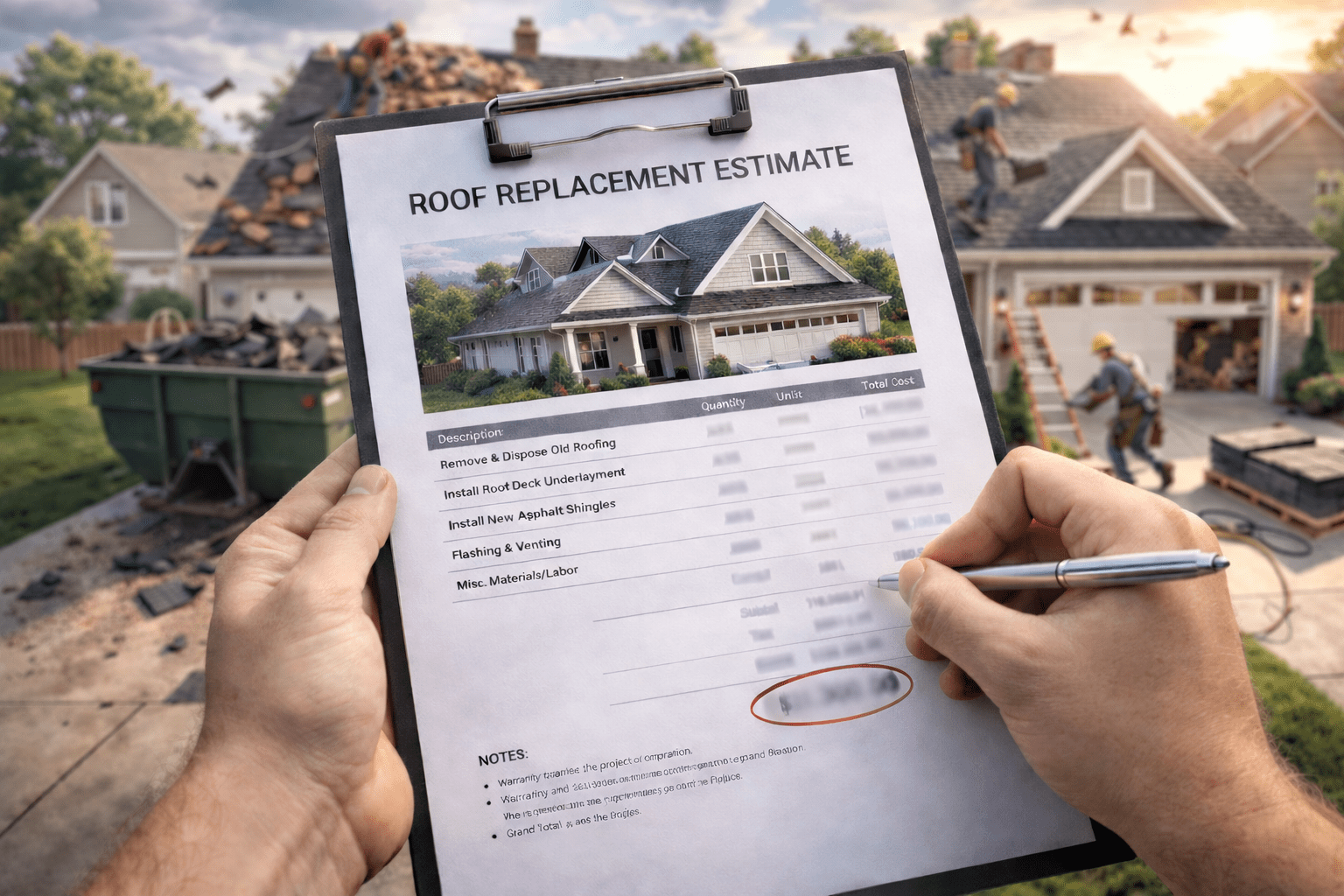
Most homeowners don’t realize that a roofing estimate should function more like a contract than a quote. Every line item reflects a specific material, labor task, or project cost, and anything left vague or missing is a potential gap in protection. Knowing what to look for puts you in control before the first nail is driven.
Table of Contents
What Is Included in Roof Replacement Estimates? A Line-by-Line Breakdown
When homeowners start collecting bids for a new roof, the numbers can feel overwhelming fast. Understanding what is included in roof replacement estimates is the key to comparing bids accurately, avoiding surprise charges, and making sure you’re getting honest value for one of the biggest investments your home will ever need. A solid estimate isn’t just a price. It’s a full picture of the project from start to finish.
Here’s a line-by-line look at every major cost category you should expect to see when getting a roof replacement.
Core Roofing Materials
Asphalt Shingles
Asphalt shingles are the most visible item in any roofing estimate and are typically priced per square, which equals 100 square feet of roof surface. The product type makes a significant difference in cost and longevity.
- 3-tab asphalt shingles: The most budget-friendly option with a shorter expected lifespan
- Architectural/dimensional shingles: The most popular choice, offering a 30+ year lifespan and better curb appeal
- Impact-resistant shingles: A premium option that may qualify homeowners for insurance discounts
- Metal, slate, or tile: The highest upfront cost but also the longest lifespan
A detailed estimate should specify the shingle brand, product name, color, and total number of squares being installed. Vague line items like “asphalt shingles” without further detail are worth questioning.
Roofing Underlayment
Underlayment is the moisture barrier that sits between the roof deck and the shingles. Standard felt underlayment is the more affordable option, while synthetic underlayment costs more but provides better durability and water resistance. A reputable estimate will name the specific product being used rather than listing a generic material type.
Roof Decking Repairs
Rotted or damaged decking boards must be replaced before new shingles can be properly installed. Most contractors include a per-sheet rate for any decking replacement needed.
Because the full extent of damage often isn’t visible until tear-off begins, this line item may be listed as an estimate. Before signing, ask how your contractor communicates and handles additional decking costs discovered mid-project.
What Is Included for Flashing and Ventilation?
Roof Flashing
Flashing is the metal material installed around chimneys, skylights, walls, and roof valleys to prevent water intrusion. Your estimate should clearly state whether existing flashing is being reused or fully replaced.
Old or poorly installed flashing is one of the most common causes of roof leaks, and most experienced contractors will recommend replacing it entirely during a full roof replacement.
Proper Attic Ventilation
Proper attic ventilation protects against heat buildup, moisture damage, and premature shingle deterioration. Your estimate should specify the type of ventilation included in the scope, whether that is ridge vents, box vents, or soffit vent improvements.
This line item is sometimes left out of lower-cost bids and worth confirming upfront.
Drip Edge Installation
Drip edge is a metal strip installed along the edges of the roof that directs water away from the fascia board and into the gutters. It is required by most building codes and should be present in any thorough estimate. If it is missing, ask why.
Roof Replacement Labor Costs
Labor is typically one of the largest costs in any roofing estimate. It should cover the full tear-off of the existing roof, installation of all new materials, and site cleanup at the end of the job. Some contractors bundle labor into a per-square rate, while others list it as a separate line item.
Before signing, confirm the answers to these questions:
- Is tear-off included or billed as an additional charge?
- How many layers of existing roofing are covered under the quoted price?
- Is there an upcharge for steep slopes or difficult roof access?
A contractor who is vague about labor or bundles it without explanation is worth pressing for more detail.
Learn more about how labor adds to overall roofing costs in our “What Is the Cost to Replace a Roof in Bloomington, Indiana?” blog.
Roofing Permits and Inspections
Most local jurisdictions require a permit for a full roof replacement. Permit costs vary depending on location but should always be reflected in the estimate. Some contractors pull permits themselves and include the cost directly.
Others pass the fee to the homeowner separately. Either approach is acceptable, but the cost needs to be accounted for somewhere in the bid. Skipping permits can create complications during home sales or roof insurance claims down the line.
Material and Debris Cleanup and Disposal
A full roof replacement produces a significant amount of debris. The cost of a dump trailer or dumpster and haul-away fees for all old roofing materials should be clearly included in the estimate. This is a line item that sometimes disappears from low-cost bids, which is how unexpected charges surface after the job wraps up.
Additional Items to Watch For
Depending on the condition and complexity of your roof, you may also see the following in a complete estimate:
- Ice and water shield: A self-adhering waterproof membrane typically installed in valleys, along eaves, and around penetrations in cold or wet climates
- Pipe boots and collars: Rubber or metal seals installed around plumbing vents
- Ridge cap shingles: Sometimes listed separately from field shingles
- Skylight resealing or flashing kits: Flashing or sealant work around existing skylights to prevent water intrusion at the opening
- Chimney cap replacement or mortar repointing: Protective cap or mortar repairs that seal the top of the chimney and prevent water from entering the flue
Always ask whether these items are included or excluded. Getting clarity before work begins protects you from disagreements after the invoice arrives.
Roof Repair vs. Full Replacement: How to Know Which One You Need
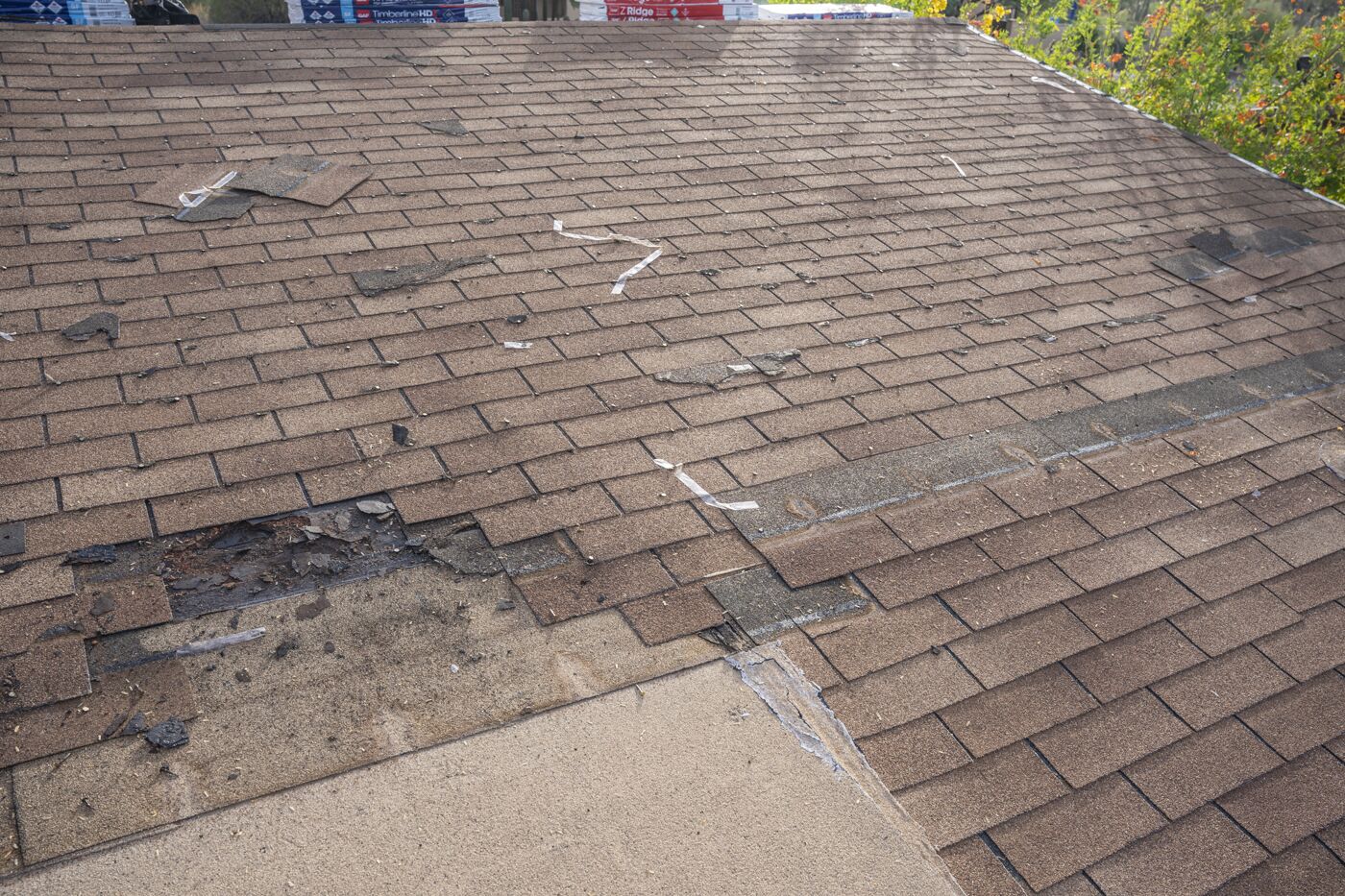
Before diving into replacement estimates, it helps to confirm that a full replacement is actually the right call. In some cases, a targeted roof repair can resolve the problem at a fraction of the cost. In others, patching a failing roof only delays the inevitable and costs more in the long run.
Signs a Repair May Be Enough
- Damage is isolated to a small, specific area such as a few missing shingles or a single flashing failure
- The roof is relatively new and the surrounding materials are still in good condition
- There is no widespread granule loss, sagging, or signs of systemic aging
Signs a Full Replacement Makes More Sense
- The roof is approaching or past its expected lifespan (typically 20 to 25 years for asphalt shingles)
- You are seeing widespread granule loss, curling, or cracking across multiple areas of the roof
- There have been multiple repairs in recent years with leaks continuing to reappear
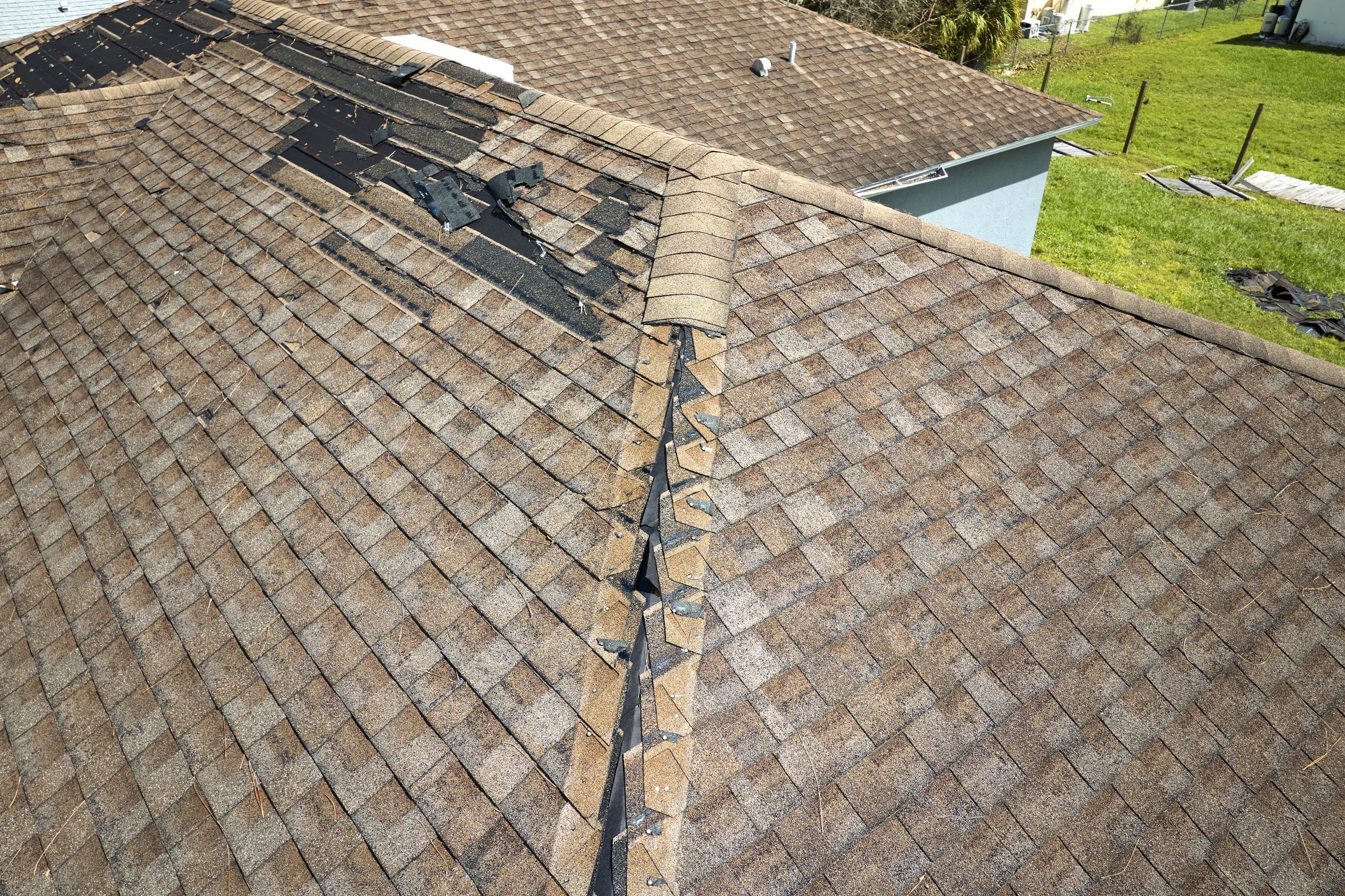
- A storm caused damage significant enough to affect a large portion of the roof surface
- The decking beneath the shingles shows signs of rot, soft spots, or structural compromise
When in doubt, a professional inspection will give you a clear picture. A trustworthy contractor will tell you honestly whether a roof repair or a roof replacement is the smarter long-term investment.
How to Compare Roof Estimates the Right Way
Since not all contractors format their estimates the same way, comparing bids on price alone is a reliable way to make a costly mistake. Instead, look at whether the same shingle brand and product line is being quoted across bids, whether labor, tear-off, and disposal are each itemized, whether permits are included, and what warranty is being offered on both materials and workmanship.
A lower number at the bottom of an estimate is not always a better deal. A bid that is missing several of the categories above almost always means those costs will appear later, or the work simply will not get done.
Get a Transparent, Line-by-Line Roof Replacement Estimate Today
You deserve to know exactly what you’re paying for before any work begins. At Urban Shield Roofing, we provide detailed, no-surprise estimates that break down every material, labor cost, and line item so you can make a confident decision.
Call us today to schedule your free roof replacement estimate.