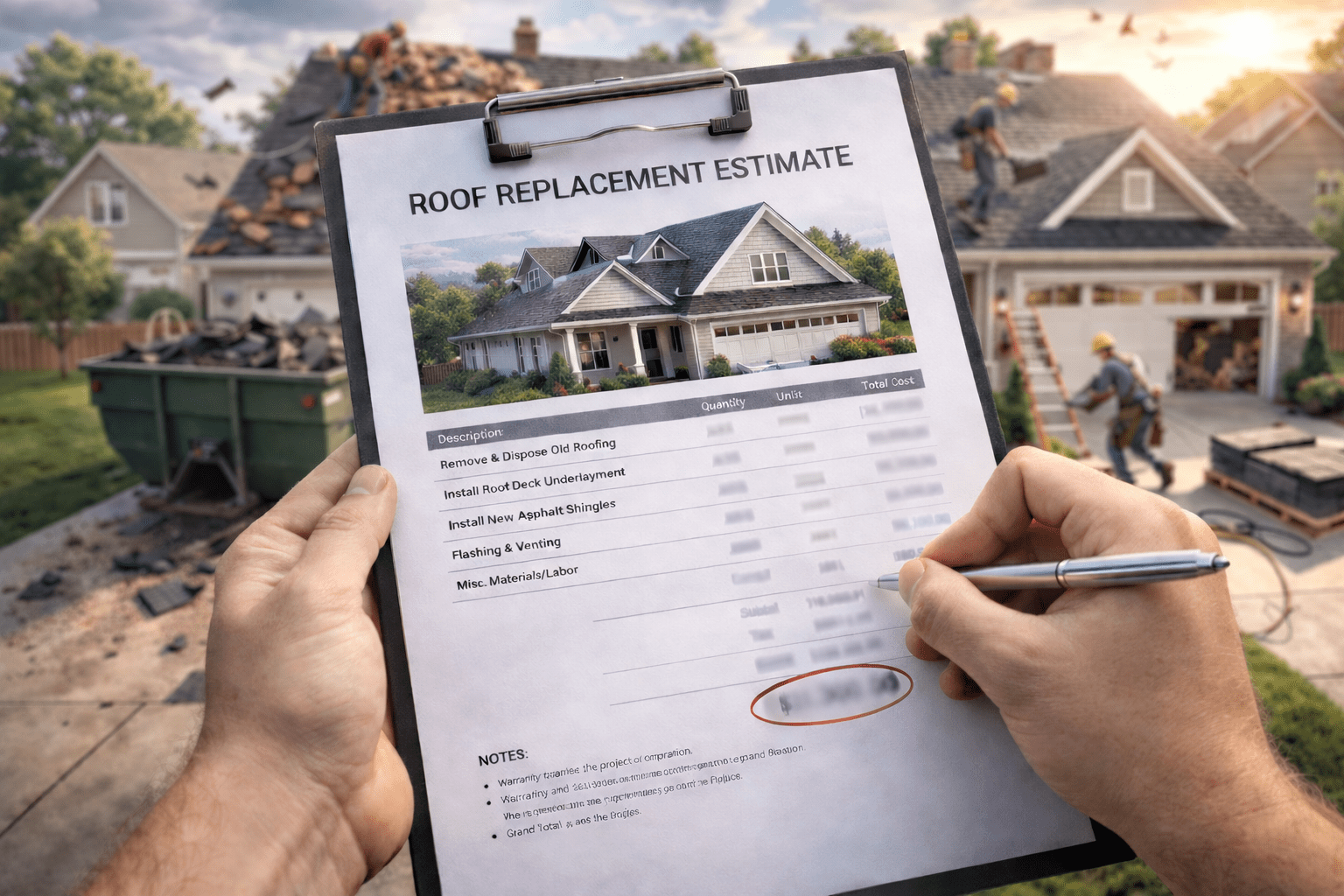
Knowing the signs you need a new roof can save Bloomington homeowners thousands of dollars in expensive repairs down the road. Indiana’s weather is not kind to roofing material. From heavy rain in the spring to heavy snowfall in winter and high winds throughout the year, your home’s roof takes a beating every season. Small problems have a way of quietly becoming larger issues, and early detection is always the best defense against serious damage and full roof replacement costs.
If your roof is already showing signs of wear, do not wait for a leaking roof or a sagging roof deck to force your hand. Here are five warning signs that your roof may need immediate attention.
Table of Contents
Recognizing the Signs You Need a New Roof
Not every problem requires a full roof replacement, but some warning signs point clearly toward one. Understanding the difference between minor leaks and extensive damage starts with a closer look at the most vulnerable parts of your roof, including roof valleys, flashing, and the underlying structure.
If you live in an older home with an asphalt shingle roof approaching the end of its 20–25 year lifespan, regular roof inspections become even more critical. The importance of professional roof inspections grows significantly as your roof ages, since problems in older roofing material can develop faster and spread further before they become visible from the ground.
1. Water Stains and Active Roof Leaks
Water stains on your ceiling or walls are among the most obvious signs that something is wrong above. A leaking roof rarely fixes itself. Left unaddressed, water infiltration works its way into the underlying structure, leading to wood rot, damp insulation, and the growth of mold that can spread well beyond the original point of water intrusion.
What to Look for in Your Attic
Your attic is one of the best places to catch warning signs before they become visible in your living space. During a thorough inspection, look for:
- Damp insulation or wet roof boards along the decking
- Mold growth spreading across rafters or sheathing
- Streaks of daylight visible through the roof surface
- Water stains or discoloration near vents, chimneys, or flashing
The risk of long-term water damage is significant when water infiltration goes undetected for an extended period. Proper attic ventilation also plays a direct role in the life of your roof. When warm air cannot escape, moisture builds up and accelerates deterioration from the inside out, compounding potential damage well before it is visible to the naked eye.
2. Missing, Curling, or Bald Shingles
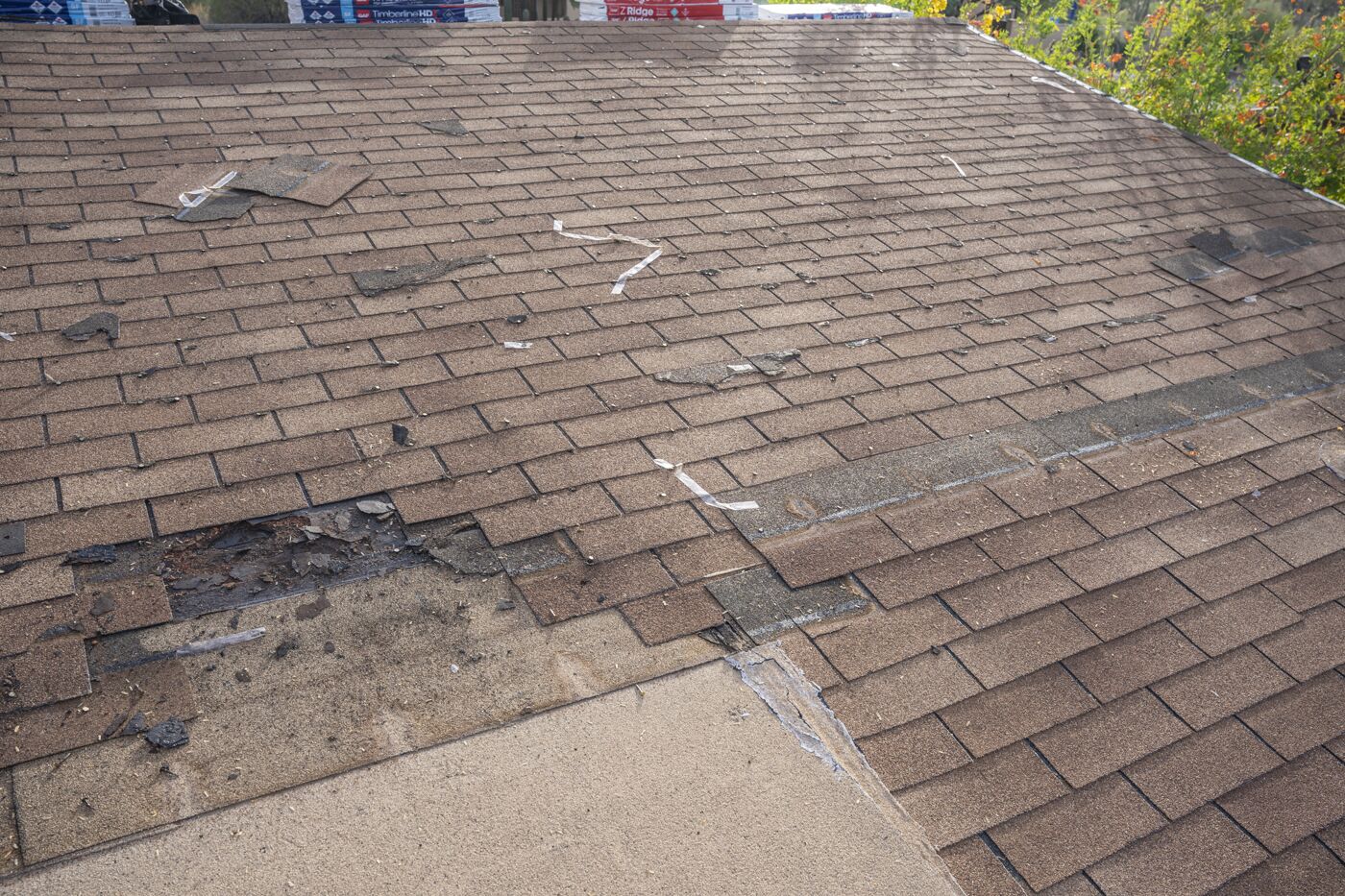
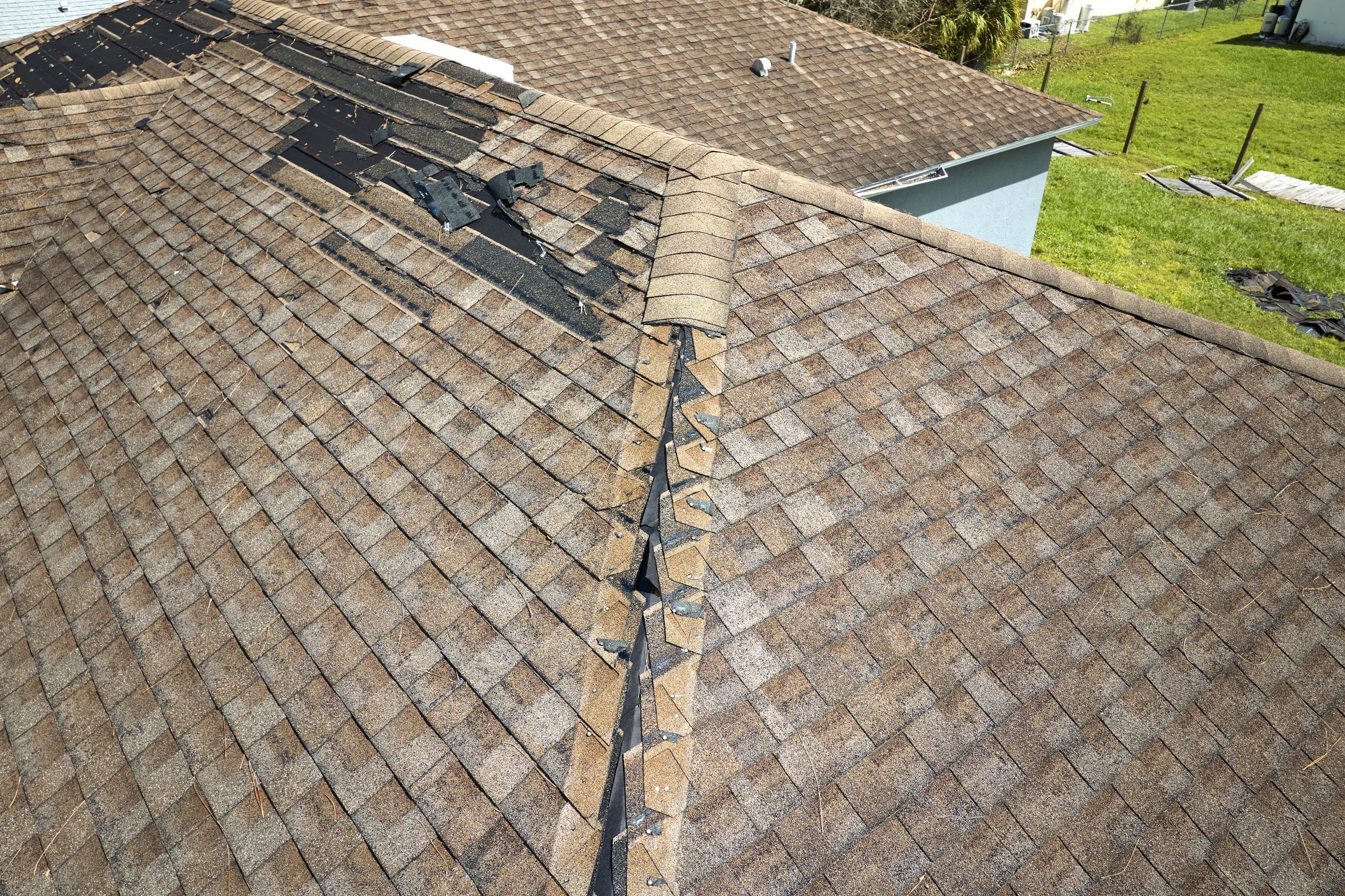
Asphalt shingles are designed to protect your home, but they do not last forever. When the roof’s shingles begin to curl, crack, or develop a bald spot where granules have worn away, your roofing material can no longer perform as intended. Missing shingles leave sections of the entire roof exposed to further damage with every passing storm.
Look for these telltale signs during a ground-level visual check:
- Shingles curling at the edges or buckling in the center
- Bald spots or heavy granule loss visible from the yard
- Shingle debris collecting in gutters after heavy rain
- Missing shingles following high winds or severe weather
For asphalt shingle roofs, widespread granule loss is a clear signal that the roof is nearing the end of its useful life. New shingles may address isolated damage, but when the pattern of deterioration is consistent across the roof’s surface, a full replacement is typically the best course of action.
3. A Sagging Roof Deck
A sagging roof deck is one of the unmistakable signs of structural damage that demands immediate attention. Sagging typically indicates that the roof boards underneath have been weakened by long-term moisture exposure, wood rot, or excessive weight from heavy snowfall. A compromised roof in this condition is a safety concern that goes well beyond what roof cement or a spot repair can address.
If you notice any dipping or sagging along the roofline, at the ridge, or anywhere across the roof’s surface, a professional assessment is essential. Waiting only increases the extent of the damage and the cost of the eventual roof repair or full roof replacement.
4. A Sudden Increase in Energy Bills
A sudden increase in your energy bills can point directly to a problem with your roof that is easy to overlook. When the roof’s integrity has been compromised, cold air and warm air escape more freely, forcing your HVAC system to work harder to maintain a comfortable temperature throughout your home.
Damp insulation caused by minor leaks and poor attic ventilation are among the most common culprits. A solid roof is a critical part of your home’s energy efficiency, and when it begins to fail, your utility bills often reflect it before visible signs of damage appear inside or outside the home.
5. Dark Streaks, Algae Growth, and Moss
Dark streaks running down your roof are typically caused by algae growth, a common issue in Indiana’s humid climate. While algae alone does not always indicate serious damage, it signals that moisture is sitting on the roof’s surface longer than it should. Left unchecked, moss and algae can lift shingles, compromise proper drainage, and accelerate the deterioration of your roofing material over time.
Environmental factors like shade and persistent moisture contribute to algae and moss development, particularly at the roof’s lowest points. Mold growth can follow, moving from the exterior surface into the underlying structure if ignored. Regular inspections catch this type of damage early, before it leads to costly roof repairs or compromises the integrity of your roof entirely.
When to Repair and When to Replace
Not every issue calls for a full roof replacement. A professional assessment helps determine whether small issues like isolated missing shingles or minor leaks can be resolved with targeted roof repair, or whether the roof’s condition warrants a full replacement. The best way to make that determination is with a thorough inspection by an experienced roofing contractor who can evaluate the full scope of the damage.
Early detection protects your investment. Addressing potential damage before it escalates into extensive damage is always more cost-effective in the long run than waiting for bigger problems to develop.
Learn more about when to repair or replace your roof here: Roof Repair vs Replacement: How to Decide What’s Right
Ready to Protect Your Bloomington Home?
If your home is showing any of these warning signs, do not put it off. Urban Shield Roofing offers free roof inspections with no-obligation estimates returned within 24 hours. Our team serves homeowners across Bloomington, Monroe County, and the surrounding area. Contact Urban Shield Roofing today to schedule your inspection and get ahead of any damage before it gets ahead of you.